Thunderstorms, a global phenomenon, demand advanced weather forecasting to mitigate disaster risks. Modern techniques using satellite imagery, radar, and ground sensors predict behavior accurately. Key factors include warm air ascent, condensation, wind speed, and microclimates. Today's weather changes due to climate change increase storm intensity and frequency, requiring adaptive strategies.
Atmospheric cues like cloud formations (cumulonimbus), pressure drops, and sound (thunder) signal impending storms. Real-time data from weather stations, satellites, and radar help identify severe weather risks. Early detection enables emergency planning and timely warnings through comprehensive alert systems. Staying informed about these natural indicators and technological advancements enhances resilience against today's powerful weather events.
The ability to predict thunderstorms is vital for public safety and understanding today’s weather patterns. Sudden, severe storms can cause devastating impacts, from flash floods to powerful lightning strikes. However, recognizing the subtle signs often indicates an impending thunderstorm. By being aware of these indicators—such as darkening skies, increasing humidity, and sudden silence in the environment—individuals can better prepare themselves and their communities for potential risks. This article delves into the scientific phenomena behind these signs, providing a comprehensive guide to help readers navigate and stay safe during stormy weather.
- Understanding Thunderstorms: A Natural Phenomenon
- Environmental Cues: Nature's Warnings Today
- Atmospheric Conditions: The Building Blocks
- Visual Signs: Cloud Formations and More
- Sound Alerts: From Rumble to Lightning
- Weather Forecasting: Predicting the Unpredictable
Understanding Thunderstorms: A Natural Phenomenon

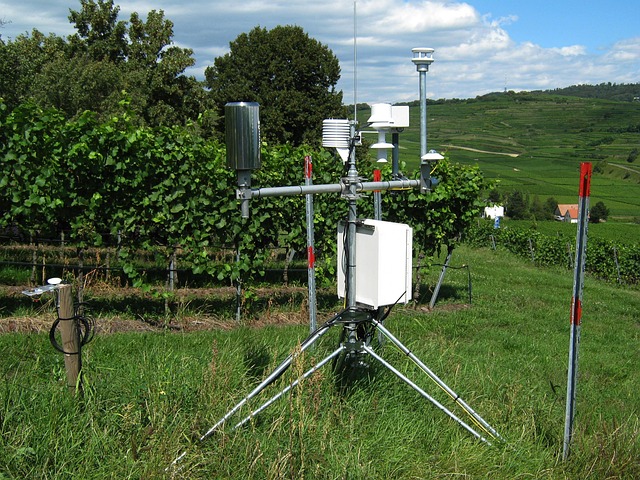
Thunderstorms are a powerful manifestation of nature’s raw energy, occurring globally and presenting both awe and concern. Understanding these atmospheric events is crucial for weather-related disaster prevention and enhancing our ability to forecast and mitigate their impact on communities worldwide. Today’s advanced weather forecasting techniques have significantly improved our knowledge of thunderstorms, allowing us to predict their behavior and severity more accurately. By employing sophisticated data collection methods, meteorologists gather insights from various sources, including satellite imagery, radar systems, and ground-based sensors, to paint a comprehensive picture of atmospheric conditions leading up to a thunderstorm.
These weather events are characterized by intense convective processes where warm, moist air rises rapidly, forming towering cumulonimbus clouds. As the air ascends, condensation occurs, releasing latent heat that further fuels the storm’s development. Wind speed measurement plays a pivotal role in assessing thunderstorm intensity; strong winds, often associated with high-level storms, can signal impending danger. Microclimates within larger weather systems also contribute to localized variations, making accurate predictions challenging yet vital for issuing timely warnings via reliable weather alert systems.
The global impact of thunderstorms is evident through their association with severe weather phenomena, including lightning, hail, damaging winds, and heavy rainfall. The Air Quality Index (AQI), a metric tracking airborne pollutants, can spike during intense storms due to increased particle concentration in the atmosphere. Moreover, as climate patterns shift due to global warming, thunderstorm behavior undergoes changes, presenting new challenges for forecasting models. For instance, data suggests that rising temperatures contribute to longer storm seasons and more frequent severe weather events, emphasizing the need for adaptive strategies in disaster prevention planning. To stay prepared, communities should refer to local meteorological resources and follow expert advice tailored to their regions, ensuring resilience against these powerful natural phenomena.
Environmental Cues: Nature's Warnings Today

The sky darkens, a foreboding sign that nature is preparing for an imminent display of power. Today’s weather isn’t just about sunny days or gentle breezes; it carries within it intricate cues that can foretell the arrival of a thunderstorm. Environmental cues, often subtle yet profound, serve as natural warnings that help us prepare and stay safe. By understanding these indicators, we can enhance our ability to predict and respond to intense weather events, such as hurricanes, which are becoming more frequent due to global warming.
Data collection methods have advanced significantly, allowing meteorologists to monitor microclimates—local atmospheric conditions distinct from the surrounding area. This precision enables them to identify potential storm hotspots and issue timely weather alerts via sophisticated systems. For instance, satellite imagery and radar technology play pivotal roles in tracking cloud formations, detecting water vapor, and identifying lightning activity, all of which are crucial for hurricane formation conditions. By analyzing these data points, experts can predict the path and intensity of storms with surprising accuracy.
One notable change observed in today’s weather patterns is the increased frequency and intensity of extreme events. This phenomenon is closely tied to global warming, which alters atmospheric circulation patterns and moisture availability. As a result, regions that were once relatively unaffected by severe thunderstorms or hurricanes now face heightened risks. For example, areas experiencing rapid urban development often struggle with heat island effects, exacerbating local microclimates and creating unforeseen challenges for weather forecasting and disaster management.
Staying informed is crucial; visit us at wildfire risk assessment anytime to access the latest insights and tools for preparing against these natural phenomena. By recognizing environmental cues and embracing modern data collection methods, we can better navigate today’s ever-changing weather landscape and ensure our safety during potentially dangerous conditions.
Atmospheric Conditions: The Building Blocks

The formation of a thunderstorm is a complex interplay of atmospheric conditions, where the building blocks of this powerful phenomenon are set in motion by a delicate balance of elements. Today’s weather naturally presents a captivating picture when examining these factors, especially as they relate to impending storms. Let’s delve into the key indicators that suggest a potential thunderstorm is on the horizon.
Atmospheric instability is a primary driver, often characterized by rapid vertical growth in the atmosphere. This occurs when warm, moist air rises rapidly, creating an environment conducive to storm development. Humidity levels play a pivotal role here; as moisture-laden air ascends, it cools and condenses, leading to cloud formation and potential thunderstorm activity. Weather maps interpretation becomes crucial in tracking these movements, allowing meteorologists to predict the path of such storms. Moreover, the greenhouse gas effects cannot be overlooked; certain gases, like carbon dioxide, contribute to atmospheric warming, potentially intensifying storm systems.
Another significant factor is atmospheric pressure variation. Areas of low pressure often signal the presence or impending arrival of a thunderstorm. Air rushing toward these low-pressure zones can create strong winds and dramatic weather shifts. For instance, data from weather stations has shown that sudden drops in barometric pressure can precede thunderstorms by several hours, serving as an early warning sign for storm chasers and enthusiasts alike. Additionally, the interaction between solar radiation and the Earth’s surface, as explored through solar radiation interactions studies, influences temperature gradients, which can trigger localized thunderstorm formation.
In terms of practical advice, being aware of these atmospheric conditions is essential. Keep an eye on weather forecasts that highlight sudden changes in humidity levels or pressure systems. Weather maps and real-time data can provide valuable insights, especially for those prone to severe weather events. Remember, understanding the building blocks of thunderstorms allows us to better prepare and navigate today’s ever-changing weather patterns. Find us at [website/source] for more in-depth analysis on atmospheric interactions and their impact on global weather events, including tsunamis and other extreme phenomena.
Visual Signs: Cloud Formations and More

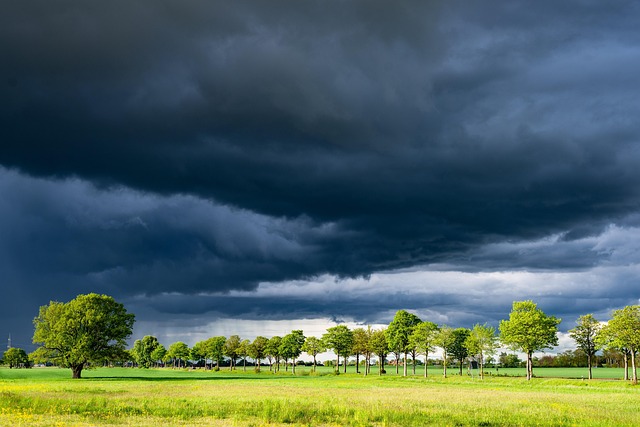
The sky above can offer a wealth of clues when it comes to predicting an impending thunderstorm. Visual signs, particularly cloud formations, are critical indicators that today’s weather may take a dramatic turn. As air masses and climate zones interact, specific cloud types begin to form, offering early warnings for those who know what to look for. For instance, the cumulonimbus cloud—a towering column of dense, vertical growth—is a clear signal that severe storms could be on the horizon. This majestic yet menacing structure often brings intense lightning, heavy rain, and even hail.
Seasonal changes also play a significant role in cloud behavior. During warmer months, when atmospheric conditions are favorable, these dramatic clouds can form more readily, indicating an increased likelihood of thunderstorms. Barometric readings can further aid in this prediction; rapid drops in pressure often precede severe weather events, providing a crucial visual and scientific clue. As the air mass characteristics shift, so too does the potential for these powerful displays of nature’s might.
Observing these visual signs requires a keen eye, but it is an essential skill for those who want to stay safe during unpredictable weather. By understanding cloud formations and their associated weather patterns, individuals can better prepare and respond to severe storms. For more detailed insights into air mass interactions and climate zone influences, explore our comprehensive resources tailored to enhance your storm prediction skills.
Sound Alerts: From Rumble to Lightning

The sounds of nature can often be our best indicators of what’s to come, especially when it comes to storms. As the weather patterns shift and global warming impacts our climate, understanding these cues becomes increasingly vital for both personal safety and weather-related disaster prevention. One of the earliest signs of an impending thunderstorm is the rumble of distant thunder—a sound that carries over long distances, allowing us to anticipate the storm’s arrival. This audible signal is a result of the intense low-frequency sound waves created by the rapid movement of air during a storm.
The progression from a rumble to the lightning flash is a fascinating interplay between atmospheric conditions and acoustic properties. As clouds gather and become more dense, they reflect and refract sound waves, creating a distorted version of what’s happening below. This phenomenon can cause thunder to seem closer than it actually is, providing a crucial clue for those paying attention. For instance, if you hear thunder before seeing lightning, the storm is likely nearby, with the flash of lightning merely catching up to the sound as it travels at approximately 300,000 kilometers per second.
In today’s world where air quality index (AQI) levels and cloudy skies are frequently monitored, these sounds can offer a unique, natural metric. Paleoclimatic reconstruction studies have shown that by paying attention to nature’s alerts, we can gain insights into the intensity and frequency of storms, which is particularly valuable for communities prone to weather-related disasters. By utilizing data collection methods from various sources, including ground stations and satellite imagery, experts can predict and prepare for such events. For example, a cloudy sky, often a harbinger of an approaching storm front, coupled with the rumble of distant thunder, can indicate an impending change in AQI levels due to increased moisture and potential air pollution.
In summary, while global warming continues to shape our climate, these natural sound alerts offer a simple yet powerful tool for awareness and preparation. By recognizing the signs, from the initial rumble to the dramatic flash of lightning, we can enhance our ability to navigate through changing weather patterns and ensure the safety of our communities.
Weather Forecasting: Predicting the Unpredictable

In today’s world where weather conditions can change rapidly, accurate weather forecasting plays a pivotal role in predicting and preparing for extreme events like thunderstorms. While nature’s unpredictability remains a constant, advanced meteorological techniques enable experts to decipher subtle signs that indicate an impending thunderstorm. By closely monitoring various atmospheric factors, meteorologists can issue timely warnings through sophisticated weather alert systems, helping communities stay safe.
One of the key indicators is a significant rise in atmospheric moisture and instability, often measured through wind speed and humidity levels. Sudden increases in 10-minute average wind speeds exceeding 35 mph (56 km/h) can signal turbulent air masses approaching. This phenomenon, coupled with high humidity, creates an environment conducive to severe thunderstorms. For instance, a study of microclimates within urban areas revealed localized hotspots where rapid temperature rises and unique wind patterns can lead to concentrated storm development.
Additionally, the interplay between surface conditions and volcanic activity can also influence thunderstorm formation. Volcanic ash and sulfur dioxide emissions can act as catalysts for cloud condensation, potentially triggering electrical activities in the atmosphere. As these particles scatter sunlight, they contribute to the warming of lower-level air, fostering unstable atmospheric conditions that favor thunderstorms. Geoscientists employ radioactive dating techniques in geology to study these volcanic effects, providing valuable insights into long-term climate patterns and their relationship with weather events.
By integrating real-time data from weather stations, satellites, and radar systems, meteorologists can identify rotating updrafts or mesocyclones, a hallmark of supercell thunderstorms. These powerful storms are known for producing severe weather phenomena such as large hail, damaging winds, and tornadoes. Early detection of such signatures through advanced weather forecasting models enables the activation of emergency response plans and ensures that communities at risk receive timely warnings via the comprehensive weather alert systems in place.
In understanding what signs indicate an impending thunderstorm, today’s weather offers a wealth of natural cues. From atmospheric conditions like humidity and wind shifts to visual phenomena such as cloud formations and sudden darkness, these are all telltale signs that nature itself presents. Additionally, sound alerts like rumbling thunder or the flash of lightning provide advance warning. By combining environmental observations, atmospheric knowledge, and leveraging modern weather forecasting technologies, we can better predict and prepare for these powerful storms. This article has equipped readers with a comprehensive toolkit to decipher these natural warnings, enhancing their ability to stay safe and informed in today’s dynamic weather patterns.
About the Author