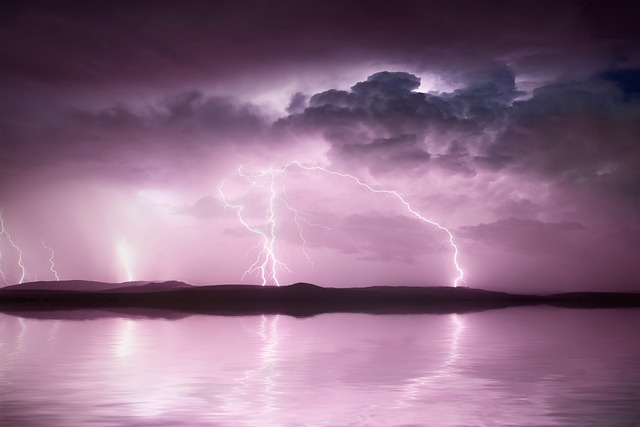
The Earth's daily temperature cycle is driven by solar radiation and surface absorption, with nighttime cooling influenced by cloud cover, humidity, and landforms. Human activities, such as urbanization, contribute to "urban heat islands." Understanding these natural processes and their interactions with atmospheric chemistry helps meteorologists predict today's weather accurately, manage air quality, and prepare for extreme conditions. Calibration of meteorological instruments is crucial for precise temperature readings and analyzing changes in air quality index (AQI). By studying these multifaceted dynamics, we enhance our ability to adapt to and mitigate environmental challenges in today's weather naturally.
Today’s weather naturally exhibits profound variations across day and night, with temperatures dropping significantly during the latter. Understanding why this occurs is not merely an intellectual exercise; it has practical implications for energy consumption, agricultural cycles, and even human health. This article delves into the multifaceted reasons behind this daily temperature fluctuation, exploring both atmospheric processes and Earth’s rotation. By the end, readers will gain a comprehensive understanding of the intricate interplay between celestial mechanics and our planet’s climate, empowering them with valuable insights into today’s dynamic weather patterns.
- The Natural Daily Cycle: Earth's Temperature Fluctuations
- Nighttime Coolness: Understanding Heat Loss
- Factors Influencing Temperature Drop at Night
- Atmospheric Processes: How Air Moves at Night
- Today's Weather Patterns and Nocturnal Cooling
- Adapting to Nighttime Chills: Human and Natural Responses
The Natural Daily Cycle: Earth's Temperature Fluctuations

The Earth’s daily temperature cycle is a fascinating phenomenon driven by a combination of factors that cause our planet to heat up during the day and cool down at night. This natural process plays a crucial role in shaping today’s weather patterns and has profound implications for various aspects of life, from agriculture to wildfire risk assessment. As the sun rises each morning, its rays reach different parts of the globe, warming the surface through solar radiation. This energy is absorbed by the land, oceans, and atmosphere, leading to an increase in global temperatures. During the day, as activity intensifies, so does heat generation, with human activities and industrial processes also contributing to this effect.
However, as the sun sets, the Earth begins its transformation. The lack of direct sunlight causes a rapid decrease in surface temperature. This phenomenon is further exacerbated by the cooling effect of night-time clouds, which can significantly impact local climate zones. In regions classified as Climate Zone 1, for instance, where temperatures tend to be milder, nocturnal clouds can provide a moderate level of protection from extreme heat, while in hotter zones like Climate Zone 3, they may contribute to more significant temperature drops. Another critical factor is moisture content measurement; higher humidity levels trap heat, delaying the onset of night-time cooling. Understanding these dynamics is essential for accurate wildfire risk assessments, as cooler temperatures and elevated moisture content can create optimal conditions for fire propagation.
The natural daily cycle also highlights the intricate relationship between climate zones and local weather patterns. As the Earth rotates, different regions experience varying stages of day and night, resulting in distinct temperature fluctuations. This variability emphasizes the need for precise weather forecasting techniques to predict these changes accurately. By studying historical data and employing advanced models, meteorologists can give us a call to understand and prepare for these daily shifts, ensuring communities are equipped to adapt to today’s ever-changing weather conditions.
Nighttime Coolness: Understanding Heat Loss

The nighttime coolness we experience is a result of natural processes related to heat loss, which are fundamentally linked to today’s weather patterns. As the sun sets, its energy no longer directly heats the Earth’s surface, allowing the planet to slowly release the accumulated heat. This process, known as radiative cooling, is one of the primary factors influencing temperature drops at night. The Earth’s atmosphere acts as a blanket, trapping heat from the sun during the day and then releasing it back into space after dark.
Cloud cover also plays a significant role in this equation. During cloudy nights, especially when clouds are present for 1-3 times or more, they can act as an insulator, trapping heat near the surface. This results in slower cooling rates compared to clear-sky conditions. For instance, cloud layers can reflect sunlight back down onto the ground, keeping areas warmer than they would be under clear skies. Conversely, on cloudless nights, heat easily escapes into space, leading to more pronounced temperature drops.
Seasonal changes further complicate this dynamic. As we transition through the seasons, the angle at which sunlight hits the Earth alters, affecting how quickly heat is absorbed and released. During summer months, longer daylight hours and higher sun angles mean faster heating during the day, followed by rapid cooling at night. In contrast, winter nights experience slower heating and more gradual temperature decreases due to shorter days and lower sun positions.
To gain a deeper understanding of these patterns, weather services employ radar technology applications that monitor cloud coverage and atmospheric conditions precisely. By analyzing barometric readings and tracking cloud movements, experts can predict how much heat will be retained or lost during different periods, helping to accurately forecast nighttime temperature fluctuations. This knowledge is invaluable for planning outdoor activities and ensuring safety, especially when severe storms are predicted.
Factors Influencing Temperature Drop at Night

The nightly temperature drop is a multifaceted phenomenon influenced by a range of environmental factors interacting with today’s weather naturally. As the sun sets, the Earth begins to cool down due to several key processes. One primary factor is evaporation rates, which slow down at night as plant transpiration decreases. This reduction in evaporation allows for better air movement and temperature distribution, leading to cooler conditions across many regions. Additionally, during evening hours, the surface of the Earth loses heat more quickly compared to the day due to reduced solar radiation, contributing significantly to the nocturnal cooling trend.
Another crucial aspect involves weather modification techniques employed globally to enhance weather forecasting techniques and mitigate weather-related disasters prevention. These strategies, while complex, can influence local microclimates. For instance, urban areas often experience what’s known as the “urban heat island effect” due to high building densities and dark surfaces absorbing sunlight. This phenomenon can lead to warmer daytime temperatures and slower night-time cooling compared to rural areas. Conversely, mountainous regions may exhibit rapid temperature drops at higher elevations, a result of reduced atmospheric pressure and increased exposure to cooler air masses.
Meteorological instruments calibration plays a vital role in understanding these trends accurately. Tools like thermometers, barometers, and humidity sensors provide essential data for analyzing air quality index (AQI) changes throughout the day. By calibrating these instruments regularly, meteorologists ensure precise temperature readings, critical for both local communities and global climate studies. Moreover, monitoring AQI levels helps identify pollution spikes or improvements related to weather patterns and human activities, offering actionable insights into air quality management strategies.
In conclusion, the complex interplay of evaporation rates, surface heat loss, urban dynamics, and meteorological instrument accuracy collectively shape the nightly temperature drop. By delving into these factors, we gain valuable insights not only into today’s weather naturally but also in our ability to adapt and mitigate environmental challenges through advanced weather modification techniques and precise monitoring systems.
Atmospheric Processes: How Air Moves at Night

At night, the Earth’s surface cools down significantly due to several atmospheric processes that influence heat transfer. One of the primary factors is the movement of air masses, which plays a crucial role in shaping today’s weather patterns naturally. During the day, the sun heats the ground unevenly, causing warm air to rise and cool as it reaches higher altitudes. This process, known as convection, sets the stage for the next phase at night.
As the sun sets, the surface cooling intensifies. Warmer air above starts descending due to reduced solar heating, creating a cycle of descending and rising air currents. This movement is further influenced by geographical features such as mountains, which can funnel warm air down slopes, leading to rapid cooling. For instance, the effect is notably seen in regions with mountainous terrain where nighttime temperatures can drop drastically compared to lower-lying areas.
The application of radar technology has significantly enhanced our understanding of these processes. Modern weather radars can track the movement of air masses and provide valuable data on temperature gradients at various altitudes. This information is critical for forecasting weather patterns, including the formation of hurricanes under specific conditions. Additionally, volcanic activity also plays a role in temperature fluctuations, as ash and gases released into the atmosphere can affect global climate models, though their effects are often more localized. By monitoring these processes, meteorologists can better predict nighttime cooling trends and provide more accurate forecasts, which is where evaporation rates come into play—as surface cooling impacts moisture levels, understanding these dynamics is key to comprehensive weather management.
Today's Weather Patterns and Nocturnal Cooling
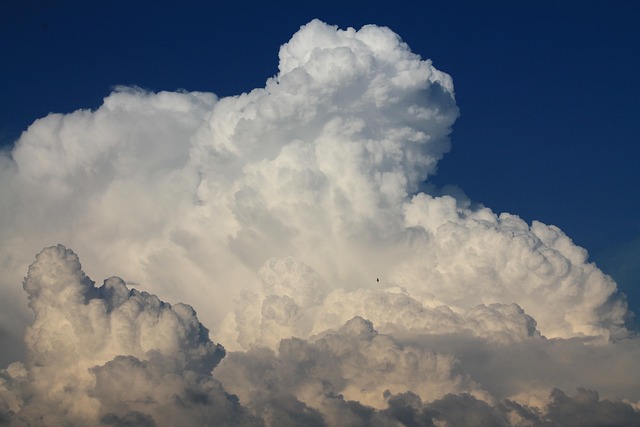
Today’s weather patterns exhibit unique characteristics, particularly when considering nocturnal cooling. As the sun sets, the Earth begins to release its stored heat energy, leading to a significant drop in surface temperatures. This phenomenon is a result of atmospheric chemistry and the complex interplay between solar radiation, cloud cover, and air mass characteristics (give us a call at air mass characteristics for further insights). The transition from daytime heating to nighttime cooling is not merely a gradual process; it’s an intricate dance influenced by various factors that experts are still unraveling.
Weather forecasting techniques play a pivotal role in understanding these patterns. Meteorologists utilize advanced models and data gathered from remote sensing technologies to predict how temperature variations will unfold during the night. Long-range weather forecasting has become increasingly sophisticated, allowing us to anticipate not just daily fluctuations but also potential snowfall accumulations over extended periods. For instance, a detailed analysis of atmospheric chemistry basics reveals that certain air pollutants can trap heat, leading to localized areas of increased temperature at night—a challenge in urban environments where the ‘urban heat island’ effect is prominent.
These weather-related dynamics have profound implications for weather safety precautions. Knowing when and why temperatures drop suddenly can help individuals prepare for cold spells and potential extreme weather events. For instance, sudden nocturnal cooling might signal an approaching cold front or a change in wind patterns, prompting communities to take preventive measures against freezing conditions or heavy snowfall accumulation. By staying informed and understanding today’s weather naturally, citizens can better protect themselves and their property during these varying atmospheric conditions.
Adapting to Nighttime Chills: Human and Natural Responses

The drop in temperature during the night is a multifaceted phenomenon deeply rooted in our planet’s weather patterns and geological processes. Understanding this variation is key to navigating today’s changing climate and predicting future weather conditions. One of the primary reasons for nighttime chills lies in the interplay between solar radiation, atmospheric composition, and landform dynamics. As the sun sets, the Earth begins its natural cooling process due to a decrease in sunshine duration. This reduction triggers changes in atmospheric pressure and temperature gradients, leading to denser air masses that descend, causing lower temperatures at the surface.
From a meteorological perspective, the concept of isostasy and landform evolution plays a significant role in regional temperature variations. Landforms, shaped by geological processes over millennia, influence local microclimates. For instance, mountains can block cloud-bearing winds, leading to drier conditions and warmer nights on the leeward side. Conversely, valleys may trap cold air, resulting in lower temperatures compared to surrounding higher elevations. These natural features contribute to diverse climate zones within a single country, making precise long-range weather forecasting challenging but essential.
Human activities also impact nighttime temperature patterns. Urban areas, often referred to as urban heat islands, experience higher temperatures due to the concentration of asphalt and concrete, which absorb and retain solar energy. This phenomenon is in stark contrast to rural regions, where cooler night air prevails. Understanding these disparities is crucial for developing adaptive strategies that mitigate the effects of climate change and urbanization on local ecosystems and human health. By delving into atmospheric chemistry basics and studying long-range weather patterns, experts can enhance our ability to predict and respond to nighttime temperature fluctuations effectively.
Actionable insights for individuals include recognizing the importance of proper insulation in homes, especially during cooler evenings, and adapting outdoor activities to the changing conditions. For example, layering clothing and considering the time of day for strenuous exercises can help people stay comfortable and safe as temperatures drop at night. By embracing these adaptations, folks can not only endure but also appreciate the fascinating interplay between Earth’s systems that creates our dynamic weather.
Through exploring Earth’s temperature fluctuations, heat loss mechanisms, and atmospheric processes, this article has illuminated why temperatures drop at night. Key insights include the natural daily cycle of heating and cooling, influenced by factors like atmospheric circulation and solar radiation. Today’s weather patterns are inherently tied to these nocturnal cools, driven by air movement and environmental conditions. Understanding these dynamics is crucial for both human comfort and ecological adaptation. Practically, recognizing the role of today’s weather in natural temperature regulation empowers us to better anticipate and prepare for nighttime chills, fostering a deeper appreciation for Earth’s complex systems.
About the Author